
Stone of Remembrance

June 23, 2009

Walter Hunt Author Newsletter, Volume 6, Issue 2

Filed under: Writing, Games, Travel, A Song In Stone, Commentary, Newsletter — hotc @ 2:58 pm

June, 2009

Welcome to the second issue of my mailing list newsletter for 2009, intended to provide you with information about my work, my website www.walterhunt.com, and my activities and appearances. It has been a terribly long time since the last one; I apologize for that, but it has been hectic, confusing, and busy. Things are still hectic, but there is at least some new news to report.

Books Update

The Dark Wing Universe

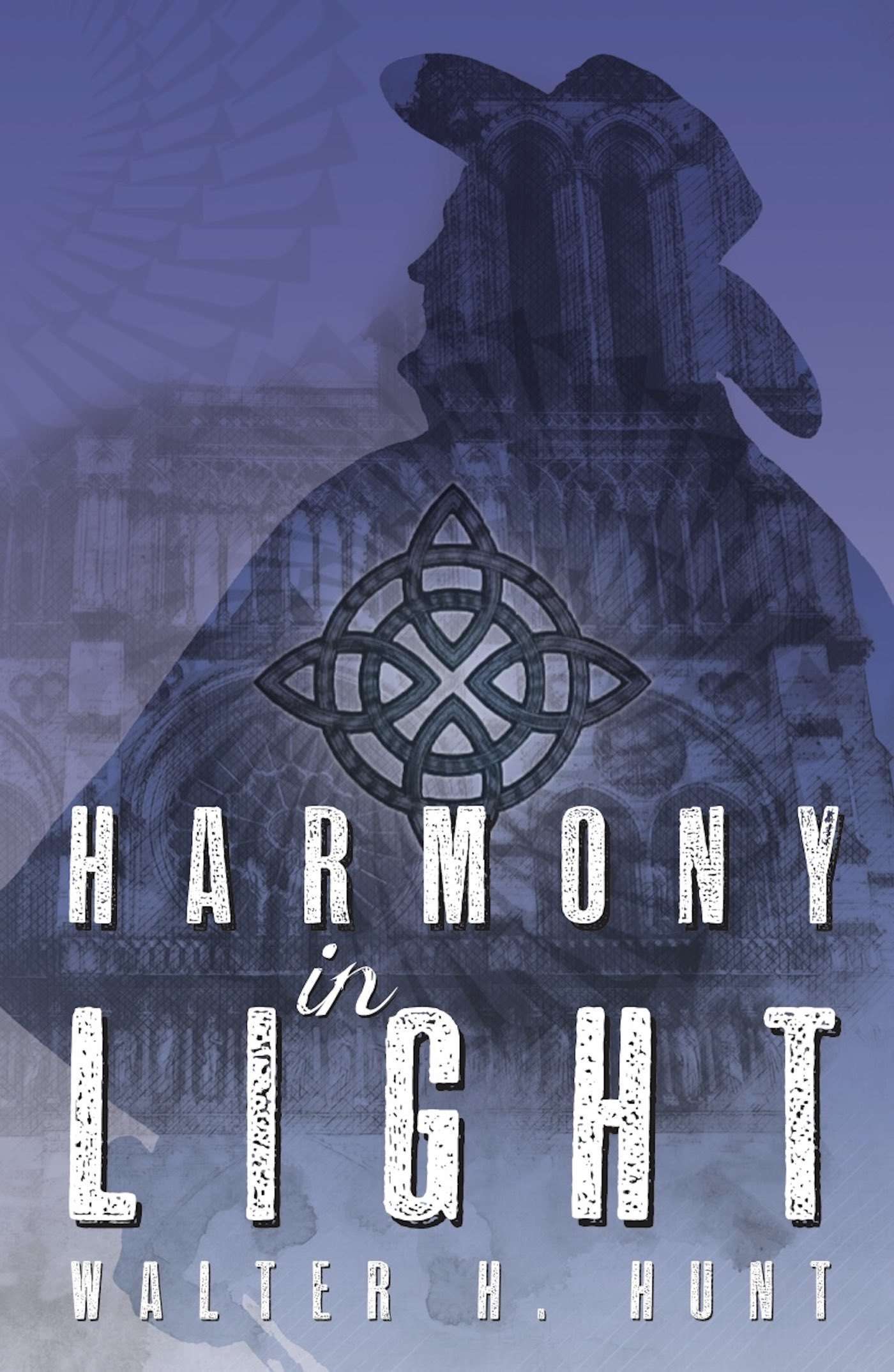
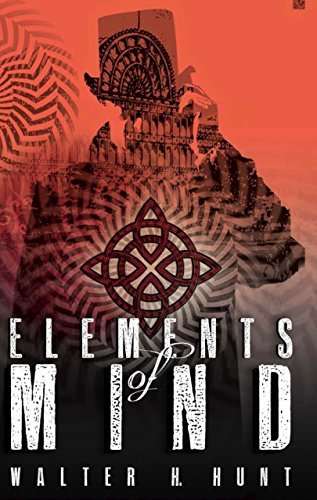
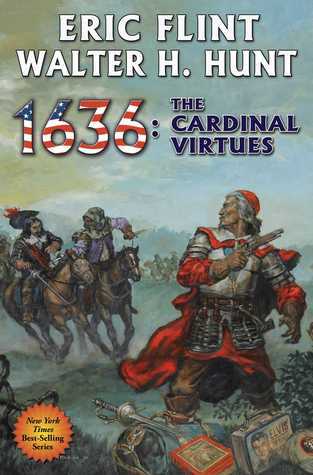
The Dark Wing series is mostly out of print.

The Dark Wing is available in Russian at Ozon and Books.ru.

The series is available in German from Random House / Heyne, available from amazon.de:

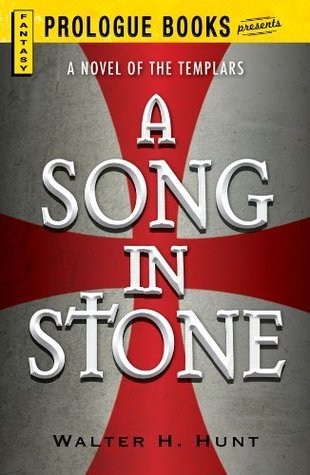
A Song In Stone

A Song In Stone has been placed out of print by Wizards of the Coast, but it can be ordered from amazon.com. No paperback edition is planned, but it has been exceptionally well received despite a lack of publicity.

I am considering the idea of making it into a podcast book. To that end, I am looking for a partnership with someone who possesses the necessary expertise to make it a product that meets or exceeds my audience’s expectations – and not just a recording of me reading my own work. It deserves better than that, and so do you.

I am doing all I can to promote the book by personal appearances. I have received a number of invitations from Masonic organizations to give a talk on Rosslyn and on A Song In Stone; when I appear, I have copies of the book with me to sell. I have already redirected some portion of receipts to Masonic charities such as the Knights Templar Eye Foundation, in part due to the efforts of my friend and brother Bob Winterhalter. To my Masonic friends: if you know a Masonic body such as a Lodge of Instruction that would like to have a speaker, and would permit me to sell books, please contact me and let me know. The same goes for educational institutions such as colleges; I’m more than willing to put miles on the car.

What it means to my other readers: if I could send a copy to the many people who have taken an interest in my writing over the last several years, I would – but it’s neither practical nor profitable. If you can’t afford to buy a hardcover, or prefer not to purchase books in that format, I understand. But your local public or college library might. In the acknowledgements to A Song In Stone, I thank the reference librarians both at my public library and my college library for their generous assistance in research. I have placed a copy of an extensive glossary to enhance your reading pleasure.

King & Country

As reported previously I’ve been working on some short(er) material set in the King & Country alternate history timeline. The short(er) work has a good chance of appearing in print soon; more news as I have it. More information on the background on the main site. The novel is now about 40% complete. I was recently told by a historian (of whom I’m a great fan, and who gave me a few minutes of his time when he visited Newport, RI to give a talk): “you know the history well enough: time to write the story.” So I’m doing just that. You will like this book, I hope.

Other Writing

I have been developing a proposal for a book set in the nineteenth century that deals with the mesmeric movement. It’s got an outline but isn’t quite a proposal yet.

Other Projects

I am pleased to announce that after more than twenty years of evolution and development, the New England railroad/business game I developed with a long-time close friend has been sold to Rio Grande Games for publication in 2010. Many, many people have playtested this game over its many years of life, and I hope to include all of their names in the rule book. Rio Grande is an outstanding company that sets a very high standard in production quality, and it will be an honor to have a game with our names and Rio Grande’s name on the box.

Upcoming Appearances

2009

I will be at Readercon in Burlington, Massachusetts, July 10-12 as a participant. This literary convention is one of the best events on the speculative fiction calendar, and the Saturday night entertainment is not to be missed.

I will be at Confluence in Pittsburgh, Pennsylvania, July 24-26. I was recently asked to be a judge in the PARSEC short story contest, and I was asked to be present when we give the awards for the best stories.

We will be in attendance at Montréal Worldcon August 6-10.

I am intending to be at one of the middle state conventions - either Capclave or Philcon - later in the year.

2010

I will be at both Boston conventions in January and February. I have been invited to RavenCon in Virginia in April.

We will not be at Australia Worldcon. I’m expecting that we will attend Raleigh NASFiC in early August.

Worldcon Bids

The 2011 Seattle Worldcon bid has been withdrawn, which is unfortunate. The only standing bid is for Reno, which we have presupported.

There is only one bid announced for 2012, Chicago (as I reported on my blog several months ago.) There is a Texas bid for 2013 that will be having a bid party at Montréal Worldcon.

What I’m Reading

I read the Economist, a weekly news magazine. You should too.

During our visit to Amsterdam I bought Anne Frank Remembered by Miep Gies, one of the group that helped conceal eight Dutch Jews for two years during the Nazi occupation – until they were sold out for thirty pieces of silver. This book was not a literary masterpiece but was compelling and moving; I cannot speak too highly of it, or in praise of the woman who wrote it. She’s still alive as of this writing, having turned 100 this year. It is a personal account of a terrible time and a monument to indomitable spirit that fascism and hatred could not crush.

I have just finished reading The Lunar Men, an account of the “Lunar Society” – a group of five polymaths and natural philosophers (Erasmus Darwin, Joseph Priestley, James Watt, and others) whose interaction sparked a generation of inventors and thinkers. It’s a great read.

I would also like to put in a plug for my good friend Lawrence Schoen’s first novel Buffalito Destiny, which I had a chance to read and blurb. His work in short fiction should whet your appetite for this entertaining longer effort. BIG CLOCK! (If you don’t know what that means, count yourself fortunate.)

On a much lighter note, my daughter read The Lightning Thief in sixth grade, and it was a great romp. (She chides me that I never read fiction anymore.) There are other books in the series, and an author website with a study guide and everything. Despite all of that it’s an enjoyable read.

I recently received the newest book in the Schlock Mercenary dead-tree editions, The Scrapyard of Insufferable Arrogance. The cover features a worried toaster on a counter in front of a group of heavily armed individuals. I met the author of this brilliant webcomic, Howard Tayler, at Denver Worldcon last year, and we talked writing and plot late into the night. He’s a terrific guy and has even given me props in his blog. I have it on RSS feed.

I also have Erfworld in my RSS list. It’s another webcomic that’s hard to explain: you have to read it, and read it carefully, in order to get what Rob Balder and Jamie Noguchi are doing. I’ve met Rob (but not Jamie); what is it about webcomic authors being great guys? I don’t know. If I could draw I could be one of them :)

Final Thoughts

Thanks to everyone for their continued encouragement and support. Having a chance to write professionally means I get to do what I truly love, and I hope you will always feel that your confidence in me is well-placed. Keep reading, and keep in touch.

Feel free to forward this to anyone who might be interested.

Content © 2009, Walter H. Hunt.

June 22, 2009

It’s Got You Covered

Filed under: Commentary — hotc @ 11:26 pm

Time travel? (Not that I’ve investigated the theme any . . . ) Don’t worry, this has you covered. Funny stuff, and it’s a t-shirt as well. There’s apparently one to help you avoid being executed for heresy, still in the works.

Why yes, officer. I am a geek. So are many of my friends and many of my readers as well. What’s it to ya?

June 16, 2009

47th Mersenne Prime

Filed under: Commentary — hotc @ 7:06 am

Well. It’s been a while.

A newsletter is on its way shortly, but in the meanwhile ponder the following: an internet-wide effort called GIMPS has been working since 1996 to find more Mersenne Primes, numbers of the form 2^n-1 where p is prime. Last Friday the 47th such number, 2^242,643,801 - 1, was independently verified. It’s a big number.

And yes, I was a math geek in junior high and high school, I was in the Math League and everything.

My daughter wants the t-shirt. It’d be printed real small, or be a really, really big shirt.

April 23, 2009

Gathering of Friends 2009 - In Brief

Filed under: Games, Commentary, Travel — @ 7:54 am

This has been a busy spring. I suppose that’s a good thing in a way: too many projects, too much opportunity; there are talented people who aren’t finding enough to do right now. Still, it means I’m behind on almost everything, including this blog. But even though this is late – by at least a week – I think it’s probably still worth recounting my recent trip to Alan Moon’s 20th Gathering of Friends, recently held in Columbus, Ohio.

The Gathering is a gaming get-together held in a hotel. It runs non-stop for ten days and is invitation-only, and is the source of envy and even lampooning by others; but it’s a great event, a chance to play with people I only get to see once a year, and to see what’s new from Essen and Nürnberg. Speaking German isn’t so much help these days thanks to Rio Grande, but it still helps, as sometimes I’ll see something that doesn’t hit the English-language game sources for several months, or even a prototype that hasn’t made it yet. (In past years, I got to see Dominion before it became a phenomenon, and tried out Uwe Eickert’s excellent WWII combat game Conflict of Heroes when it was in prototype. I also played Pandemic as a prototype a couple of years ago, but I actually haven’t played the finished version yet. So it goes.)

I usually bring a list of what’s new, and try to get in a play of as many such games as I can to see what might be worth buying. Our game collection is already quite big, but you know, nothing succeeds like excess. Usually there’s one game that is a big hit, a surprise small press sleeper, and some solid-but-I-don’t-have-to-buy this ones. This year was no exception, other than the big hit. I played several other games that aren’t listed below, and a few neat prototypes I can’t talk about, but these are the highlights. Hope you enjoy.

Some folks were excited by Eggert’s Castle for All Seasons, which I test-drove last year, but I continue to be unimpressed. There’s nothing I can say to heap further praise on Race for the Galaxy beyond the fact that L. and I have gotten it to the table at least 300 times since we first got it almost a year and a half ago, but I can’t say much about the upcoming expansions – not just #2, due this summer, but the prototype-only #3. I don’t think that it’s jumped the shark yet. (But there’s still time.)

I guess the most well-received new release would have to be Days of Wonder’s Small World, a fantasy retheming and reworking of Phillippe Keyaerts’ Vinci, a civilization building game that lasts an hour instead of eight. We sent our copy packing – it just didn’t get played enough; but Small World was getting enough compliments that I thought I’d try it.

Here’s the concept. Instead of creating civilizations, picking attributes, spreading out and then choosing to go “into decline” when there’s nothing left to do, you pick a fantasy race consisting of two attributes, one the race/nation type (Amazons, Dwarves, Sorcerers) and the other a modifier (Flying, Hunted, Annoying – well, maybe not Annoying.) This part is clever: they exist as thick tiles that fit together and are chosen in pairs. There’s a selection mechanism similar to Vinci that lets you pick a combo that’s not immediately on offer. Off you go to conquer the map (there are different ones for each number of players); so many races, so little time. VPs are secret and the game lasts only 10 turns. The graphics for Vinci were ugly; Small World’s are garish, though the production value is great. It was fun and I’d play it again, but don’t think I’d buy it.


Small World: So Many Races, So Little Time

If I were to pick a favorite new game from the Gathering, it would have to be the latest in the cooperative-game genre, Asmodée’s Ghost Stories. This isn’t quite new, but it was my first crack at it. It plays best, perhaps only, with four players, each representing a Taoist monk with color-specific powers, fighting against the forces of a nasty demonic villain who sends legions of nasties toward a village before coming on stage himself at the end of the game. A gaming vet friend at the Gathering was down on it, describing it as “Lather, Rinse, Repeat” – but I got to play with three people who made it enormously fun. We played with the upcoming expansion and won by the skin of our teeth at the very end. There was a 3-D model on display but I didn’t get to try it. This might be a buy, if not for us than for the club. It’s hard, and it’s fun, and it looks like it has enormous replayability.


Ghost Stories: Cooperate or Die. Or Worse.

There was a time when Alea could be counted on to provide a cool new “gamer’s game” every year. Some of them, like Puerto Rico are perennial favorites (and PR would still be #1 on BGG but for those darned kids and their card games). But they’ve turned in some clunkers too. This year’s offering was light almost to the point of irrelevance: Alea Iacta Est, a dice rolling and allocation game. There’s certainly some strategy to it, but like the tile-laying game Maori, I don’t think there was anywhere enough game there to make me want to try again. I suppose that it comes down to being jaded, or refusing to be a part of the Cult of the New, but I don’t expect to bother with either of these. In the case of Alea, which has passed the relevance test a number of times, I confess to being disappointed.


Alea Iacta Est, Maori: Nothing New Here. Move Along.

The same is true of Ystari’s latest offering, Bombay, a resource manipulation and reallocation game. I have quipped about Ystari games in the past that they can all be described as “manipulating colored components into pleasing patterns” – at various levels of complexity; I’ve come to appreciate William Attia’s Caylus and we even own it, though I still think the fun is largely sucked out of it by people who are really good at it (i.e., not me). Our favorite Ystari game has to be Yspahan, which I’m also no good at, but L. likes a lot. The new one, though, left me unimpressed. The little plastic elephants are cute, with baskets to carry resource cubes on their backs, but that’s not enough to compensate for never being able to get back the time I spent playing it. On the other hand, as I told someone at the Gathering, at least it wasn’t very much time.


Bombay: Little Pink Pachyderms, For You and Me.

I played two licensed product games, one Cthulhu-themed (Die Hexer von Salem) and the other based on one of my favorite novels – The Name of the Rose. Neither made me want to go out and buy it. Hexer is a cooperative venture to get all of the nasties out of R’lyeh and close all of the warp gates before everyone goes mad or demons eat everyone’s face; it was difficult and frustrating, which might be true to the theme, but didn’t make it much of a game for me. Rose is a deduction game with two interesting mechanisms: first, you have cards that let you move any of the pieces on the board to increase “suspicion”, but no one knows which piece really represents you; and second, everything takes time, and it’s a Bad Thing to end the round, so you balance cost against effectiveness. But it comes down to a deduction game at the end – who’s the Red monk? Who’s the Blue? It’s like a long, fiddly, drawn out game of Mastermind. So I’ll pass on both.

And then, of course, there’s the big hit cooperative/competitive game – Battlestar Galactica. It’s a very faithful and incredibly nicely produced game about the TV series, in which some (but not all) players are good humans just trying to find a new home after the nasty Cylons blew up their old one. Halfway through the game, more people can turn into toasters; there’s lots of accusation and lots of analysis. Some game groups will do well with this: some will find it less compelling. I assumed it was basically Frackin’ Werewolf; unlike other games of its type, it’s not a cooperative game with a traitor mechanism, it’s a psychological exercise with an admittedly beautifully-executed and thematic game wrapped around it. I played it at 1 AM and wound up accidentally doing the wrong thing, which meant I spent a lot of the game in the brig. But I was, after all, a Toaster. So say we all. I’d probably like to play it again, and might buy it if it turns up on heavy discount at a bookstore as it did last Christmas. It was fun, but I liked Ghost Stories much better.


Battlestar Galactica: Yep, It’s Frackin’ Werewolf.

Last year I played and enjoyed Martin Wallace’s Brass, a moderately-complex game about rail and canal and industry in Lancashire. This year Wallace offered a simpler, gentler historical game about Cornwall mining – Tinners’ Trail. I’ve recently been reading a fantastic book called The Lunar Men, about eighteenth-century polymaths and scholar-inventors, one of which was James Watt, whose steam engines helped revolutionize Cornwall mining, so I was up on the subject. I don’t know if it helped me play the game, but at least I knew what an adit was. It’s vintage Wallace: there are limited resources, things have costs, there are dice to create randomness, turn order is important, and there are nice historical touches. I won, but only by a few points. One of the most interesting things is that things cost money – at auction or as a means of development – but at the end of each of the game’s four turns, you can use your existing funds to buy victory points, which is the only thing that matters to win the game. Nicely balanced. Don’t know if I’d buy it, but it was fun to play.


Tinners’ Trail: Martin Wallace Goes To Cornwall

For the second year, we had a chance to get eight people together to play an epic battle of Commands & Colors: Ancients. As with last year, it took place during the Friday night “Game Show”, an event I participated in once (and enjoyed not at all, not because it wasn’t well done but because it’s simply not fun for me.) This year featured the same overall commanders – Eric Brosius and Tyler Putnam – and the battle was Cannae, a big honkin’ army of Romans against a big honkin’ army of Carthaginians. Some of last year’s commanders came back to play again, and the Roman center was commanded by none other than the game’s designer Richard Borg, who provided a prototype of the new Epic deck for us to use. I sat to his right, and got to face Doug Hoover’s Carthaginian medium and heavy cavalry. Fortunately, Tyler didn’t have anywhere near enough action cards for his left wing, so a lot of the action was in other parts of the battlefield; by the time the horsemen came down on my position I’d gotten some of my better troops in line and they faced some stiff opposition. Borg, however, turned out to be unable to roll any hits on Jim McCarthy’s Carthaginians (who didn’t have any of those troublemaking elephants this year), and we dropped a tough decision by 12 to 11 banners.

I think this may be the most fun way to play C&C – big battles, three generals and one commander for each side. This is by far my favorite setting for Borg’s clever system; my girls like Memoir ‘44, but that might be just for the tanks. Give me a good old cavalry charge any day.

2505 1731


Commands and Colors: Ancients – 8 Players, Lots of Blocks

Romans, left side of your screen: me, Richard Borg, Joe Rushanan, commander-in-chief Eric Brosius; Carthaginians, Doug Hoover, Jim McCarthy, Peter Card, commander-in-chief Tyler Putnam.

The Saturday night festivities – prize table, awards, announcements – were long and involved; Alan is an impresario, and this is his stage (and his show), and is entitled to some reflection and reflection on what this event has become. There were some very nice videos made by attendees, and while my favorite didn’t win, I did appreciate and enjoy watching them all. This is an interesting community: gamer geeks mostly, very picky about what they like, but patient with newbies and usually willing to sit and play a game for the game’s sake rather than the desire for fierce competition (there’s WBC for that, after all.)

This year’s Gathering produced two very exciting results for me. One is still under discussion, while the other is a done deal. I don’t feel at liberty to discuss either right now, but I’ll have more details soon. (And there’ll be a newsletter soon too. Promise. Really. It’s coming, I can feel it.) I hope to be able to say that the several trips I’ve made to a gaming event are justified by these projects getting completed; my best pal L. has put up with the inconvenience and I can’t thank her enough. We’ll see soon enough.

I have already signed up for next year, and am looking forward to it. Thanks, Alan.

April 2, 2009

A Bloody Deed.

Filed under: Commentary — @ 7:44 pm

My buddy who goes by the name A Fool Who Should Know Better passed this on to me.

This is worth 20 minutes of your time. Watch it. You’ll never look at Richard III the same way again.

March 24, 2009

European Tour Spring 2009: Day 9/10 – Dortmund, Part 2

Filed under: Writing, Commentary, Travel — hotc @ 1:57 pm

I’ve gone to conventions with L. (and with A., since she was born) – but mostly I’ve gone alone since I became a professional writer. One of the things I have noticed is that they tend to run together after awhile: same panels, same panelists, same format. An hour, three or four pros or fans or whatever; introductions, plugs for new work, occasional grandstanding or showboating, a few witty comments. Dealer room; con suite and/or green room; art show, masquerade, gaming, room parties. Hotel rooms all look pretty much the same after a while as well.

Worldcons are the exception, of course, though the majority of those are a regional con writ extremely large, spread over several hotels, with many more room parties, dealers and attendees you might not normally see, a bigger masquerade, generally more more more. Denver last summer was like that, though like most Worldcons we got to see the location, not just the hotels where it was taking place. The Worldcon in Glasgow was a little different flavor (or flavour, if you like), from the parties to the onsite pub – but it was readings, panels, game room, group discussions, dealers, parties . . .

Dortcon was none of those things really. There was some steady programming – a filk track, for example, that featured a talented harp player and an American now resident in Germany; A. and L. both enjoyed that. There wasn’t a game room per se, but there was some sort of ongoing Battletech tournament that I studiously avoided. (Game conventions are popular in Germany, apparently, but it’s a different setting and a largely different audience.) Markus Heitz and I both had hour-long readings, in the main auditorium with a microphone, and Dieter Rottermund (the artist GoH) had a chance to show some of his recent work. (He’s very good. There was no art show, but there was a nice display of his work – mostly book covers.)

We were introduced at the opening ceremonies and given a minute or two to speak: forewarned, I was able to carry it off in German, much to the delight of the audience – it was ther first hint that I could speak the language. Each of the three of us had an hour-long interview with Arno; mine also featured another attendee, Dirk van den Boom, who spent almost the entire hour messing around with me (though he denies it). I refused to be panicked – we got to joking, and again I was able to carry on well in German, and received a lot of applause at the end. (They liked me – but better yet, they understood my German. I realize that I’m going back to that idea a lot, but I was really surprised both on Saturday and Sunday just how quickly it came back and how easily it flowed. Their expectations were low, of course, but I don’t believe they were humoring me: one of the litmus tests for me was always whether, if I’d begun a conversation in German, a native speaker would decide that he or she would rather practice their English on me rather than let me practice my German on them. If they replied in German it indicated that I was doing well.

The toughest challenge was Saturday night. I originally thought I was to somehow participate; but instead they’d chosen a sort of prose/poetry slam format. I sat in the back for three quarters of an hour or so and listened. There were a few very funny bits, but overall I couldn’t really understand it all. It was too damn fast. There’s fluency, and then there’s fluency. I couldn’t keep up. But by Saturday night I’d managed to hit every other mark; talking with fans, participating in interviews and discussions, and everything else.


It Was Too Fast (photo by Peter Fleissner).

There were only a few pros there overall: Heitz, Rottermund, myself, and a couple of others that seemed to be on hand to sell their books (they didn’t get interviewed or participate in panels, which seemed a waste of potential entertainment). It was really all about the three of us, with a few other presentations – one on Doctor Who, one on space travel, one on Jean-Michel Jarre . . . in some ways, the DortCon committee had organized a literary-only convention to suit themselves and had invited a few guests with star power to help enhance the program. Rottermund is very talented; Heitz is prolific and well-known in Germany. I was the recommendation of one of the committee members, who sold the idea to Arno and the others. (How cool is that?)

I think that from me they got more than they bargained for. They expected a writer whose work had been well-received in German translation. The group they’ve invited is a very small one: Norman Spinrad, Larry Niven, Alastair Reynolds, and most recently Nancy Kress – all very good writers – and me. Do I rank with them? In an absolute sense, no, of course not: but the DortCon committee chooses guests to please themselves. They aren’t primarily from Dortmund; Arno and Gabi are from Düsseldorf; others are from elsewhere. They have a Verein, a sort of association that is more like a club than a corporation, and that in turn is a member of a German club federation. They help vote for the EuroCon, and interact with other con groups (some of them attend the con in Leipzig, for example) but DortCon is largely about getting together every other year and having this literary thing with a German writer, a non-German writer, and an artist. It’s not a EuroCon, it’s not a Worldcon, it’s not even Balticon. It’s 15% the size of Balticon. It’s less than half the size of Readercon, which it probably most closely resembles, with its literary bent and Saturday night entertainment. But despite those figures, it’s among the largest cons of its kind in Germany at a little more than 200 attendees. It was good enough to make an online newspaper, though.

At the closing dinner Sunday night Arno and I discussed the con scene. He in particular, but both he and Gabi, are certainly SMOFs in the broad sense; Arno is an impresario, a master of ceremonies, a fan who enjoys being a fan in the best possible way. I cannot be sure, but as I said, putting us on a first name basis from the first made him very pleased.


The Impresario (photo by Peter Fleissner).

This points directly at my philosophy about this entire pro thing. I don’t think I deserved a spot at the table at cons until I became a pro, but if asked by an unpublished writer-want-to-be, I would say that the difference between us was that I was five books ahead. Until I reach the status of Larry Niven or Scott Card or Jack McDevitt, I’ll always feel that way. Maybe even then. It’s extremely gratifying to be recognized and appreciated for my published work – I’m proud of it. But perspective on these things is very important.

I’ll put up a final post with a few pictures from the con, along with some concluding thoughts. There are a few people who were going to post “after-action” comments on the convention, including Arno; I’ll put links to them. Watch for all of that shortly.

March 23, 2009

European Tour Spring 2009: Day 7/8 – Dortmund, Part 1

Filed under: Commentary, Freemasonry, Travel — hotc @ 11:03 pm

We arrived in Dortmund in the late afternoon and were met at the train by Arno and Gabi Behrend, the masterminds of DortCon, which was due to get underway with a dinner gathering on Friday night. They got us very efficiently installed in the Hotel Esplanade, across the street from the Fritz-Henßler-Haus, where the con was to take place; we had a little time to get ourselves organized for a visit to a German Masonic lodge – ‘Zur Alten Linde‘ – ‘the old lime tree’. I wasn’t sure what to expect: they’d made provision for L. and A. to come with me for a family evening, and I assumed that there would be a collation of some sort after the lodge meeting.


The Tree In Question

Instead, the lodge’s Master dispensed with the usual ceremony (a bit of a disappointment, actually: I’d have liked to see it) and instead had an open meeting with the members and their ladies all present. I had prepared a speech, and decided that, if I could manage it, I would give it in German.

And that was the first big surprise of the trip.

We’d been somewhat at sea in Amsterdam, since Dutch is definitely not German: it’s fairly readable, but absolutely unpronounceable (our Scottish friend says that in order to speak Dutch you have to have a lot of phlegm. She’s right.) In Köln we’d gotten on fairly well at restaurants and in shops, since both L. and I had been in Germany as students. It was a long time ago, but it came back more quickly than I could have hoped. In Dortmund, though, I was facing a real challenge: not just ordering dinner or buying something at a department store, but actually giving a presentation in a language I hadn’t spoken every day for at least six years, when we’d last visited Germany for the Junior Year in Munich reunion.

I’d written the speech out in German, with the aid of a dictionary, and it was fairly good; simple, but not much different from the sorts of presentations I’ve been giving in lodges over the last year. And it went well. Really well. I was very nervous, but my diction was clear, my grammar acceptable, and I dealt well with questions. The lodge’s master was right next to me and helped with the occasional vocabulary word, but I was able to respond in German, intelligibly. They understood what I was saying; we had a few humorous moments; they were interested, friendly, inquisitive. It wasn’t all that much different from an English-speaking lodge. Except that it was a German-speaking one.

Afterward, we went to the apartment of a lodge member and had a little social hour. This brother is a Bezirksbürgomeister, a sort of sub-mayor; he’s a philosopher, an artist, and a science-fiction reader :-) who has all of my books and was particularly interested in A Song In Stone. In addition to being a Freemason he’s a member of Schlaraffia – a German-language fraternity that is even more tradition-filled and even more obscure than the Masons. (I’d attended a Schlaraffia meeting in Wellesley a year or so ago; they’re always conducted in German, even in non-German-speaking countries. It was great fun, but this is an organization that is quickly working its way toward obsolescence by its very nature. A shame, really, but they have to decide for themselves how to go forward. I just don’t have the time to commit to it.)

It’s hard to communicate what a rush it is to tackle something as scary as speaking a foreign language in public – and succeeding at it. The excellent experience at ‘Zur alten Linde’ was an encouraging indication of how the weekend would go.

The next morning we had breakfast with Arno and Gabi and took off to see the town. We went to a natural history museum a little way out of town, which A. really enjoyed; L. liked it too, but it was definitely chosen with our daughter in mind. We then found our way into the pedestrian zone of Dortmund, not much different from most German cities; our first stop (at Gabi’s eager suggestion) was a Belgian chocolatier, where we bought some great presents for folks back home; then we had a nice lunch, and went back to the hotel.

That evening there was a dinner (a sort of ‘pre-con’ meeting) with the principal con committee folks, as well as our friends M. and T., who had come up from Munich to be at the con with us. M. was on the Junior Year program eight years after me, and we’d met at the reunion in 2003; at the time she seemed more cynical and less happy than I thought she should be: but this time she’d brought her friend T., whom I immediately dubbed ‘der berühmte T.’ – “the renowned T.” – since I’d heard a lot about him. They were great together, obviously very close. M. seemed very, very happy.

As for the committee . . . I met a number of folks who seemed to know my books. (How cool is that? As I always say, it’s the third coolest thing, after L. and A.) There was a considerable amount of eating and drinking; nothing wrong with that. The committee folks, including Arno and Gabi, seemed very pleased that L. and I could speak German, and as the evening went on, it was clear that we were not only capable of speaking the language, but actually were pretty fluent. I’m not surprised that most guests from overseas aren’t fluent in German: there are 100 million native German speakers in the world – 1 1/2% of the world’s population, if that – and it’s not what you’d call a trivial exercise to learn any foreign language, let alone an inflected one with some serious grammar issues. It’s easier than English, but only because it actually has rules (rather than mostly exceptions). I guess I’m not even surprised that most of their overseas guests don’t speak any German, or even make much of an effort.

They, on the other hand, were stunned and really very pleased. Again, my fluency was interrupted by occasional missing vocabulary words, but most of the committee and regulars spoke some English and some (like Arno) were actually quite capable. Considering the level of English some people speak in America, they’d get on quite well.

That, along with putting myself immediately on a first-name basis with everyone (Gabi started by addressing me as ‘Herr Hunt’, and as far as I could see spent the entire con addressing Markus Heitz as ‘Herr Heitz’; I immediately insisted on ‘Walter’, and first names for L. and A. as well) placed us on a friendly footing from the start. I perceive that as having been a critical part of the congeniality that I enjoyed the entire weekend.

It was unlike any con I’ve ever attended, and I’ll tell you all about it in the next entry. Dortmund is not exactly a tourist destination, but my memories of it will always be very good.

European Tour Spring 2009: Your Gaming Interlude

Filed under: Games, Commentary, Travel — hotc @ 10:46 pm

If Euro games hadn’t become quite so easy to get in the United States due to the valiant efforts of Rio Grande Games and a bunch of retailers; and if it wasn’t for the dissemination of info by the Geek, a trip to Europe for us would have been all about scooping up lots and lots of Eurogames to take back home. With a limited amount of luggage space, though, it was hard to take advantage of the amazing selection – and there are lots of games we could have bought that are just as readily available back home. But imagine walking into a department store in the USA and finding a display like the one shown below. It was like being a kid in a candy store.


The Candy Store

That was the main wall. There were four smaller aisles, and a big display of best selling games, including Settlers, Keltis (the Spiel des Jahres), and other titles that Eurogamers would recognize. We took advantage of a sale – lots of things were marked down: sometimes as much as 40% or 50%. Our collection is already fairly big – so we settled on the following:

  • Siedler von Catan – Deutschland: a fixed board with twelve beautifully-sculpted famous buildings from various places in Germany; hadn’t seen it in the States.
  • Alhambra: a non-first-edition copy, at about half price, with currency in green color (to replace the dark brown of the first edition we have. They had the enormous box with the base game and the first four expansions, but that would have been too much to carry and was big and bulky.)
  • Volle Wolle: A Zoch small box game that L. and A. really like and that I’d somehow overlooked;
  • Sushizock im Gocklewok: The new Zoch tile-and-dice game that belongs to the Hickhack and Heckmeck family, something I’d actually been looking for; and
  • Siedler von Catan: das Würfelspiel: the Settlers dice game, which certainly isn’t Settlers, but for 5 Euros on sale it was hard to pass up.

A friend was also able to deliver me three copies of the EnBW edition of Funkenschlag (Power Grid), with the Baden-Württemburg special map. One is for our collection, one is for MVGA, our game club, and one is – for trade or sale. (Drop me an email if you’re interested.)

It’s reassuring also to have one’s impression of a game reinforced. I acquired a copy of Elasund, a Settlers building game, gave it a few plays, and sent it away because I was fairly unimpressed by it. Turns out they can’t give it away at Kaufhof in Köln, and that they bought a whole pile of them. 10 Euros will barely get you a beer and a sausage in Germany (though they’ll be a good beer and sausage, to be sure.)


I’d Rather Have the Beer and Sausage.

We only poked our heads into a couple of actual game stores, one in Holland and a few in Germany, and mostly saw the array of Carcassonne and Settlers games: didn’t see a copy of Power Grid, Puerto Rico or Agricola anywhere.

March 22, 2009

European Tour Spring 2009: Day 6/7 – Köln

Filed under: Writing, Travel, Commentary, A Song In Stone — hotc @ 6:00 pm

With the Eurail pass, we had the ability to take just about any train we wanted, and chose to time our departure so that we could arrive in Köln (Cologne) in the early afternoon. Thus, we packed up our affairs in Amsterdam on Tuesday morning and boarded an ICE train headed for Germany.

Those who travel in Europe don’t need to be told about the ubiquity and sophistication of European trains. This isn’t something we really have in America, at least not anymore; we are wedded to cars, and travel long distances by airplane. But traveling by train is really civilized: you can sit at a table; you can get up and walk around; you can even get a cup of coffee. (In fact, there are people who walk through the train and bring it to you.) IC and ICE trains are about as nice a way to travel as there is.


Service With A Smile

It took us about two and a half hours to travel from Amsterdam to Köln. Holland is flat, mostly; it starts getting bumpy in the south and west, and really acquires terrain features once you cross into Germany. When the signs appear in German you know you’ve crossed the border; within the EU there is no passport control, so we’d not have noticed otherwise. The last stretch of rail into Köln takes you over the Rhine River, not very far from where the Romans crossed it: they built the town and gave it its name – Colonia Claudia Ara Agrippinesium – in the first century AD, after Varus lost his legions to the Germans. You cross the big railroad bridge, flanked by statues, and then you see the cathedral, the biggest thing in the entire city – the Kölner Dom.


Biggest Thing.

It’s right next to the train station. Our hotel was just on the other side of the Domplatz, a short walk (with rolling suitcases.) It wasn’t very expensive, and it was very central – the Rhine was down the hill, the Dom was across the street, and the central pedestrian zone was around the corner.

Köln is an interesting city. It’s very old: an archepiscopal seat. one of the places that elected the Holy Roman Emperor, built on an old Roman town, built over Germanic ruins, built over a Neolithic settlement. Lots of stuff came to light as a result of the extensive bombing to which it was subjected during the Second World War (in all, it was struck more than 260 times by Allied air raids); when they went to build the new City Hall in the 1950s, they discovered the foundations of the Praetorium, the original administrative building for the Colonia. In the picture below, taken during the war, the area where the ruins were found is in the upper left corner (the Dom itself is of course in the center). The place where our hotel was located is top center.


Cologne: Ruins, Created and Uncovered

This is now a wonderful museum, along with the extensive remains of a Roman villa located right next to the Dom. We toured both on “Kombi-Tickets”: they’ve done a lot of work to illustrate life in Roman times, recovering and reconstructing. L. really loved it (A. and I walked through the displays, and then waited for her to finish.)

The highlight of the visit to Köln was, of course, the Dom itself. The foundations were first laid in 1248, and it was under construction for six centuries – on and off. It’s a beautiful church: a Gothic cathedral, like the ones in A Song In Stone, ogival arches and all. This isn’t the carving-filled setting that Rosslyn is – it’s much more traditional, wide nave flanked by huge stone piers, high-windowed triforium, ambulatory around the high altar, narrow crypt. (On the steps down to the crypt, there was a unicursal labyrinth on the floor. These places all have their hidden secrets.)


Gothic, Ogival Arches and All

A. and I decided to pay the fee to climb to the top of the tower. It turns out, to no one’s surprise, that this is an activity which should be left to young people. 509 steps on a narrow circular staircase at 12-year-old’s speed is an undertaking for 50-year-old knees.

About three-quarters of the way up, there’s a side passage that leads to the bell chamber. This is a key thing to see; there’s a little kiosk there, where a guy will sell you a postcard that reads “I climbed Köln Cathedral Tower – Only Available Here”. He goes up those stairs every day to sit in the kiosk. (I asked). There are a dozen of them; I hope the guy in the kiosk has earplugs. We stopped for a few pictures, then climbed the rest of the way to the upper chamber, where there was a steel staircase that seemed a little too unsteady for either of us; I drew the line at that, pronounced myself satisfied with the climb, and we made our way back down. My knees and legs shook for an hour afterward.

There’s no good way to photograph the Dom in a way that gives perspective. I decided to lay on my back on the side of a large rectangular stone fountain, so I could take a picture of the building against the sky. The picture below gives a nice view, but doesn’t really do it justice. You just have to step back way too far for that.


This is a closeup.

And as no part of the trip report would be complete without some mention of food, I should mention an excellent meal we enjoyed down near the Rhine – just around the corner from our hotel – at Slavia, which served a combination of traditional German dishes and Croatian specialities. They had an English-language menu, but only on request – it’s the sort of place that bold tourists and German speakers enjoy, but timid tourists miss because they consider the language barrier to be insuperable. Some of the best (and most reasonably-priced) meals you can have on the Continent are where native speakers eat, and Slavia was no exception.

We said goodbye to Köln all too quickly. I think I could spend a week wandering around looking at things – for example, we walked through the Minoritenkirche, where Johannes Duns Scotus is buried: it, too, is a beautiful Gothic church, on a much smaller scale, a Franciscan church that would serve as a good model for several places in A Song In Stone. But our time was short, and the convention in Dortmund was coming up soon. On Thursday afternoon we rolled our suitcases over to Köln Hauptbahnhof, and headed for Dortmund.


A. Says Goodbye.

March 18, 2009

European Tour Spring 2009: Day 5 - Holland Tour

Filed under: Commentary, Travel — hotc @ 3:11 pm

We decided to take advantage of the train passes we bought to get a look at the rest of Holland. As one might have concluded, Holland turns out to be pretty small. We had breakfast in one place (Amsterdam), lunch in another (Den Haag), and dinner in a third (Utrecht), while exercising our train passes to go in between. We also enjoyed coffee in Delft and took a walk around Rotterdam, where we had nothing to eat, which kind of interrupts the theme.

Den Haag

The Hague is an hour away from Amsterdam by train. It seems like most every train headed south passes through the two cities. Like Amsterdam, it has numerous canals, but unlike it the city seems much more businesslike and much less tourist oriented. We walked around aimlessly for a while, intending to go to the Escher museum, but like most museums in Den Haag it was closed on Mondays. Accordingly, we took some pictures – including the one below – and settled in for lunch at Malieveld, a nice little pavilion next to the park of the same name.


Someone got paid for this.

My lunch included a sandwich made with zalm, or smoked salmon. You’d think that would be a bit risky to order in a foreign country – but it’s a common enough menu item that I thought I’d give it a try. It was wonderful. L. and A. had sandwiches that were a bit more ordinary, but it was a nice rest stop, on a beautiful afternoon. L.’s comment was that, regardless of our success at seeing any particular museum, it beat going to work.

Delft


Postcard Shot.

Less than fifteen minutes by train from The Hague, Delft is the place where all that blue pottery originates. A few minutes’ walk from the main train station walks you past some incredible postcard shots, eventually dropping you into a market square dominated by a huge old church, a huge old town hall, and several thousand souvenir shops selling authentic Delftware – among other artifacts of irresistible tourism. We skipped the church (it’s known as the burial place for William of Orange – not that William, but rather the other one.


Irresistible Tourism.

We bought nothing. I was tempted by a few little Delftware things, but they were very expensive: if I wanted to buy a genuine dish set, I suppose that would be the place to do it – but it seemed like it was just blatant tourism in action.

Rotterdam

On the train again, we found our way to Rotterdam – and given the size of Holland, it really wasn’t very far. Rotterdam was a busy port city, but like other busy port cities (Boston, for instance) it’s not what it used to be. Frankly, it reminded me a great deal of Frankfurt am Main, which isn’t what it used to be either – and for the same reason: after it had the crap pounded out of it, it was rebuilt in a much more modern style. (The difference is that we pounded the crap out of Frankfurt; the Germans did in Rotterdam as part of their few days’ campaign in conquering Holland in 1940.)


Rotterdam, 1940

Downtown seemed to be in a constant state of rebuild. Near the main train station, there were several casinos looking to separate us from our money; we resisted, and it wasn’t even a struggle. I took a shot of the immediate area before we got back on the train, and the skyline profile contained a chilling structure – the black trapezoidal thing in the foreground – that looked a lot like the Ministry of Truth building in Anderson’s movie of 1984. (I looked for a picture of it, but couldn’t find it; it does appear on screen in the final episode of Schama’s History of Britain – try YouTube for that one.)


Rotterdam: Ministry of Truth.

Utrecht

Our final stop on our whirlwind tour of Holland was Utrecht, about which I knew damn near nothing (other than about the Treaty, but that was three hundred years ago.) We had visited there briefly in 1990 to clear up a problem with Eurail passes, but stayed no more than an hour.

But it was on the way – relatively speaking. We got off the train late in the afternoon, and stepped into a busy, crowded station full of people ready to go home after a day’s work. It took some effort to make our way out of the station area, but shortly we found ourselves in an utterly charming little place that looked, at first glance as if it were part of the fake German village at EPCOT – except authentic and done right. It was like a different world.


Utrecht, Canalside.

Our dinner choice was a tapas restaurant that was located not on one of the streets along the canal, but downstairs right next to it – literally. There are a number of them, right at water level, located in what might have been storage basements. The food was excellent; it took a while to come, but even though we were tired and somewhat hungry, it didn’t seem too bad a wait. Tapas are little dishes, a little like Dim Sum; we chose two each as part of a prix fixe menu and sampled each other’s dishes.

Utrecht struck me as a place I’d like to visit at greater leisure; like Florence, it seemed like somewhere you could stay a month and write a novel. Well, I could, I think.

It took less than an hour to return to Amsterdam, where we packed up in preparation for our departure the following morning. Naturally, all this bopping around had a very If It’s Tuesday, This Must Be Belgium feel to it, but it gave us a little taste of the rest of Holland.

Next Page »

Powered by WordPress